
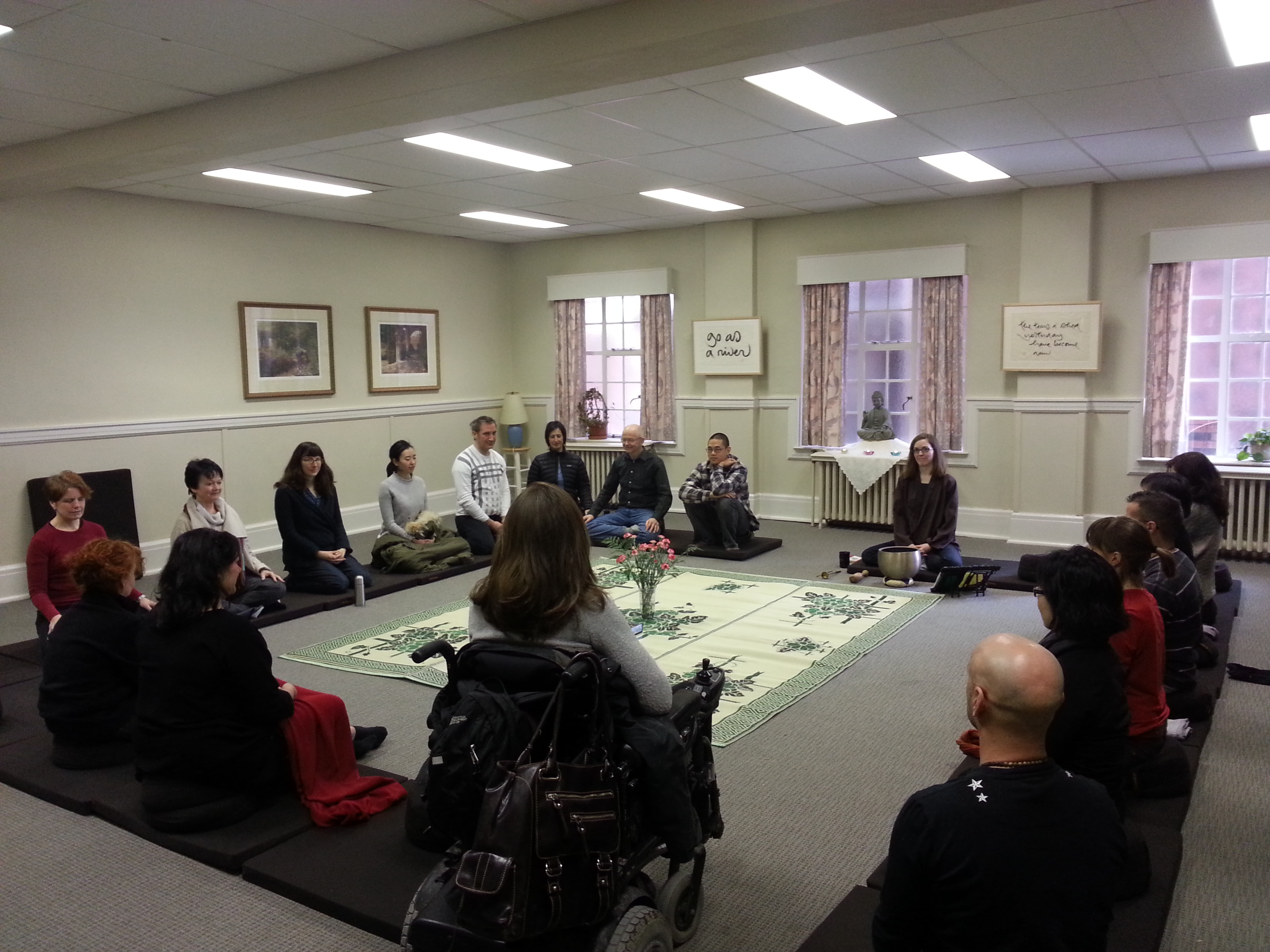
Mindfulness is always mindfulness of something. When we meditate, we need an anchor that we can return to when we begin to lose our focus and concentration. Many practitioners use the natural rhythm of the breath as an anchor. Mindfulness of breathing is a simple yet profound practice that helps us to anchor ourselves in the present moment. When we bring our attention to our breath, we unite our body and our mind. When we breathe in, and we are aware of our in-breath, we can touch the miracle of being alive.
We may choose to follow our breathing at the level of our belly or as it naturally flows in and out of our nostrils. As the air enters our body, we can feel it refreshing every cell. And as the air leaves our body, we can gently relax any tension we may be holding. Following our in-breath and out-breath brings us back to the present moment. We arrive in our body in the here and the now. Our breathing can be a stable, solid anchor that is always there for us. Whenever we are carried away by regret about something that has happened, or swept away in our fears or anxiety about the future, we can return to our breathing and re-establish ourselves in the present moment. We don’t need to control the breath in any way. We simply encounter it, just as it is. It may be long or short, deep or shallow. With the gentle energy of mindfulness it will naturally become slower and deeper.
Special Note: Our practice should always be comfortable, relaxed yet alert. Sometimes, when we are just starting our practice of mindful breathing we may experience some unexpected tension from this focus on our breath. If that is your experience, do not be alarmed. Instead, you might like to use something else as an anchor. Bringing your awareness to your hands, to each of the fingers, or to your toes and feet against the floor can be alternatives to following the breath. What is most important is your wellbeing and you will know best, which anchor feels most peaceful and comfortable.
 Mindfulness Practice Community of Toronto